Resilience by design
Protected paths and redundancy matched to the consequences of losing a link.

CAPABILITIES
The sites that matter most are often the farthest from help. Bring communications, power and local computing into one plan, with more control over the systems your operation depends on.
Connected thinking. Practical engineering. Room to grow.
THE SELF-RELIANT SITE
A distant carrier link. The next fuel delivery. A cloud connection for every decision. Each dependency deserves a deliberate choice about what your site can control locally.
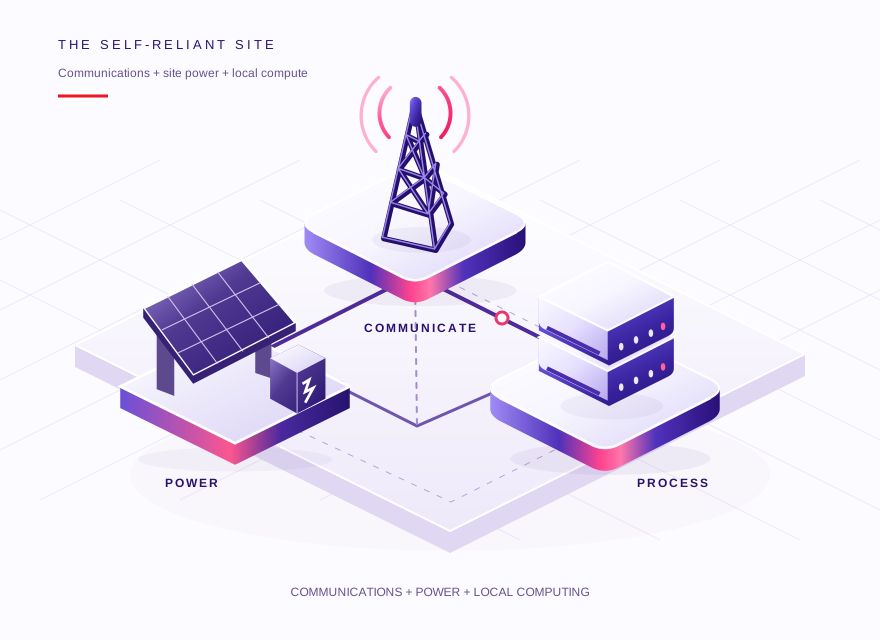
Who controls the route your critical traffic takes?
What keeps the site running when supply is interrupted?
Which decisions need to happen on site?
Greater independence starts by engineering these systems together.
A CONNECTED DIRECTION
Build from established network expertise towards site power and local computing, with each step grounded in what the operation needs.
Keep essential traffic under your control.
Established expertiseReduce dependence on the grid and fuel deliveries.
Project-specific engineeringBring selected workloads closer to the data.
Future concept01 / CRITICAL COMMS
Established expertise
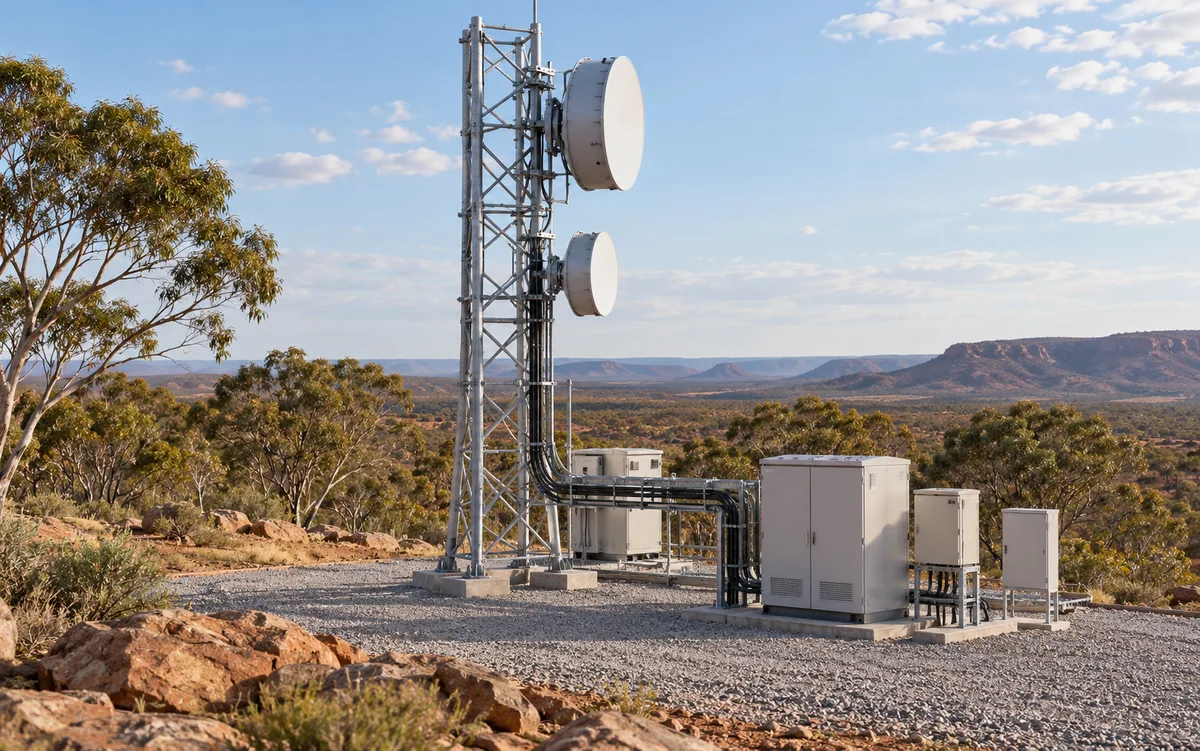
A remote operation needs communications designed around the services it carries. Protection, SCADA, voice and operational data each have different priorities. The network must account for all of them.
Photonix brings fibre, wireless backhaul and industrial networking together around your coverage, capacity and availability requirements. Private network design gives you greater control over how essential traffic moves, with external connections included where they are needed.
Network planning, integration, installation, testing and performance monitoring are part of Photonix’s established service offering.
Protected paths and redundancy matched to the consequences of losing a link.
Segmentation and traffic policies for protection, control, voice and data.
Staged cutovers, acceptance tests and rollback plans for ageing network equipment.
02 / RENEWABLES
Project-specific engineering
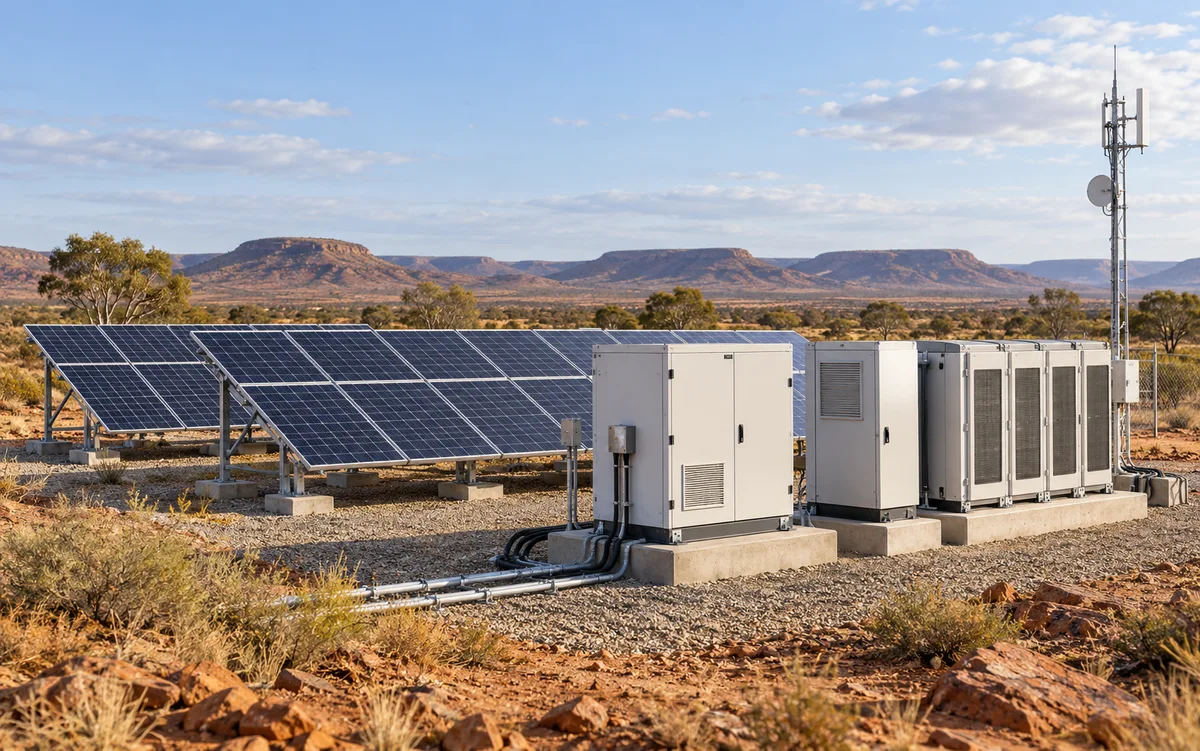
At a remote site, power planning is also logistics planning. The load, the weather and the distance to the next service visit determine how much autonomy a system needs.
The engineering approach combines solar generation, battery storage and hybrid control with the site’s communications, protection and enclosure requirements. Grid or generator support can remain part of the design. Capacity, monitoring and operating arrangements are defined through site assessment.
Build on Photonix’s Renewable & Off-Grid and enclosure offering. Site feasibility, equipment selection and the delivery scope are agreed for each project.
Storage and backup planned around your load profile, local conditions and required operating window.
Use remote visibility and a suitable energy mix to reduce routine checks and fuel dependence.
Bring battery, generation and environmental information into the site’s monitoring design.
03 / MICRO SIFS
Future concept
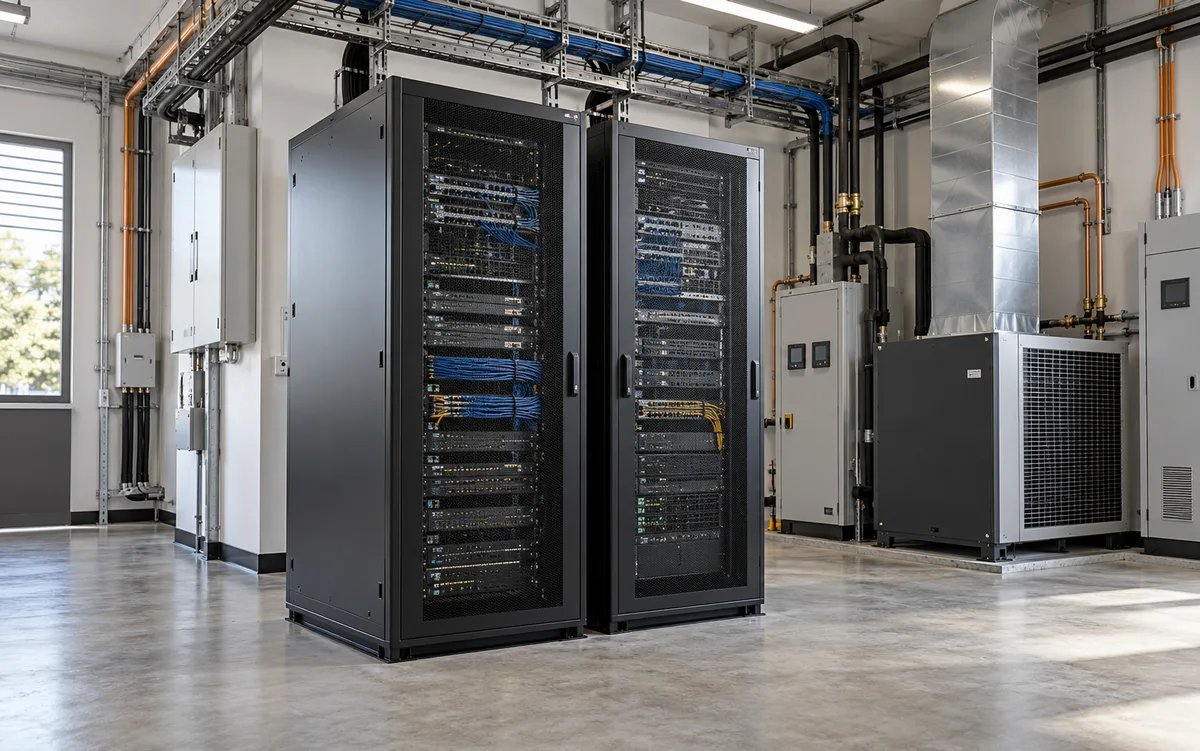
Cameras, sensors and machines generate data at the edge. Processing selected workloads on site can reduce backhaul demand and support local responses when a distant connection is constrained.
Micro SIFs bring the idea of a small on-site computing hub into focus: processing useful data close to the equipment, with power, cooling and connectivity planned together.
A future direction built on edge infrastructure, with each application subject to feasibility and validation.
Assess which analytics and inference workloads benefit from running beside the equipment they serve.
Decide what is processed on site and what is shared, with security and access controls designed in.
Start with a defined workload and validate its power, cooling and performance requirements before adding capacity.
THE SUITE BEHIND THE IDEA
Each capability draws on the Photonix solution and service range. Future concepts use that range as a starting point for feasibility and validation.
Established expertise
Fibre transport, microwave backhaul, industrial switching, multiplexing and network test equipment, selected for the project.
Project-specific engineering
Project-selected solar, battery, hybrid-control, enclosure and protection equipment. Platform choices follow the site assessment.
Future concept
Compute, storage and cooling selected to suit the application, site conditions and available power.
Photonix’s role is systems integration: select platforms on performance and fit, then engineer how they work together.
DESIGNED AS A WHOLE
The network carries power-system information. Power supports connectivity and compute. Local computing can process site data. Designing these relationships together makes the dependencies visible from the outset.
Carries monitoring data between site systems and the people managing them.
Supplies the network and compute, with capacity sized to the whole site.
Processes selected workloads locally, within the available power and cooling.
Size power for the network and the selected compute workload, including cooling and operating margins.
Define how link, power and compute information reaches the people responsible for the site.
Set responsibilities, acceptance criteria and support arrangements across the complete system.
A PRACTICAL PATH FORWARD
The direction is ambitious. The decisions are practical: establish what the site needs, test the design and scale what has been demonstrated.
Establish critical services, coverage, traffic priorities and failure scenarios.
Measure demand, assess local resources and agree storage, backup and autonomy targets.
For the Micro SIF concept, select a useful workload and test compute, cooling, security and operating needs.
Verify combined performance and maintainability before committing to repeat deployment.
A proposed development path, shaped by site requirements and validated results.
START WITH YOUR SITE
Tell us where your site is, what it needs to do and what it relies on today. We can explore the engineering priorities with you.